STORY

From Jinju to Haeundae

JosunDaega Gomtang has only just opened, but fifteen years went into it. This is how the korean restaurant came to stand in Mipo.

For fifteen years the owner ran three restaurants in Jinju, Gyeongsangnam-do, under the name Josun Bon Galbi Milmyeon. Everything learned there about handling beef and drawing a broth went into JosunDaega Gomtang.

When the premium gomtang was finally ready, the owner chose Haeundae rather than Jinju for its first home — a place full of visitors from abroad, and the right place to show what Korean food actually tastes like. It is also the owner's first restaurant in Busan.

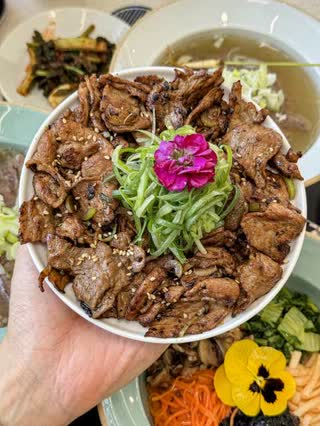
The bulgogi is the same dish that has been the house favourite since the Jinju days, kept sweet-and-savoury the way overseas guests tend to like it. With the bibimbap and its house sauce alongside, this korean restaurant sets a table that covers the breadth of Korean cooking in one sitting.

“Taste it and you will know. The depth, the body, the aroma of the beef — none of it is like the gomtang you have had before.”
— Owner, JosunDaega Gomtang Haeundae Mipo Branch
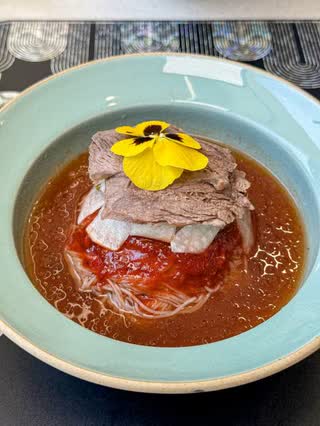
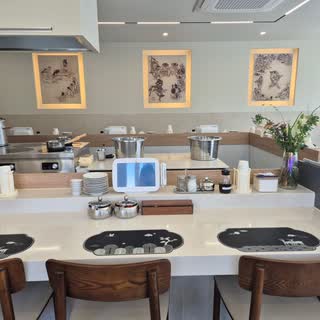
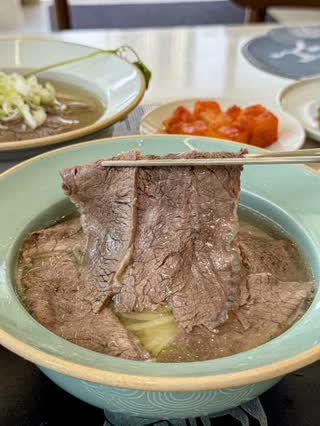
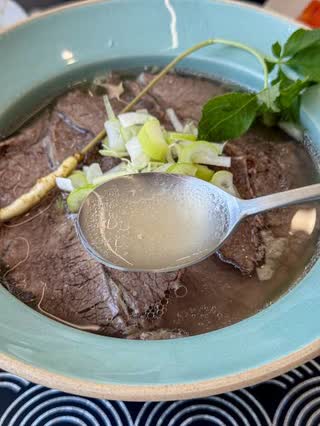
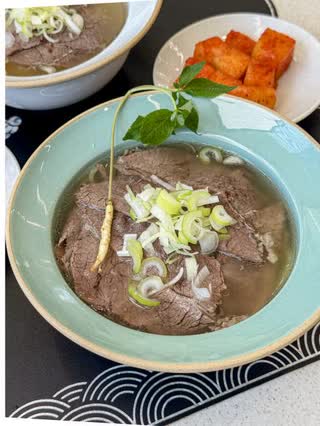
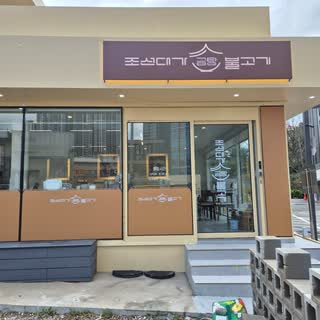
Hanwoo gomtang in celadon bowls, folk paintings above the counter seats, and the tiled-roof sign out on the Mipo road — a look inside the korean restaurant before you arrive.

HOW WE COOK

How the gomtang is made

Three rules the owner set after decades of working with beef. They are what this korean restaurant is willing to be judged on.

  1. STEP 1

    Hanwoo 1++ only

    The beef in the gomtang is grade 1++ Hanwoo and nothing else. That is why the grain holds together through a long simmer and still yields easily.

  2. STEP 2

    No additives, ever

    No seasoning powders, no additives. The flavour comes from Hanwoo beef and the owner's own method — which is why the broth tastes deeper and smells more of beef than the gomtang you are used to.

  3. STEP 3

    Finished with ginseng

    A ginseng garnish is added to make the bowl a proper restorative dish. It also gives the broth a cleaner finish.

Directions